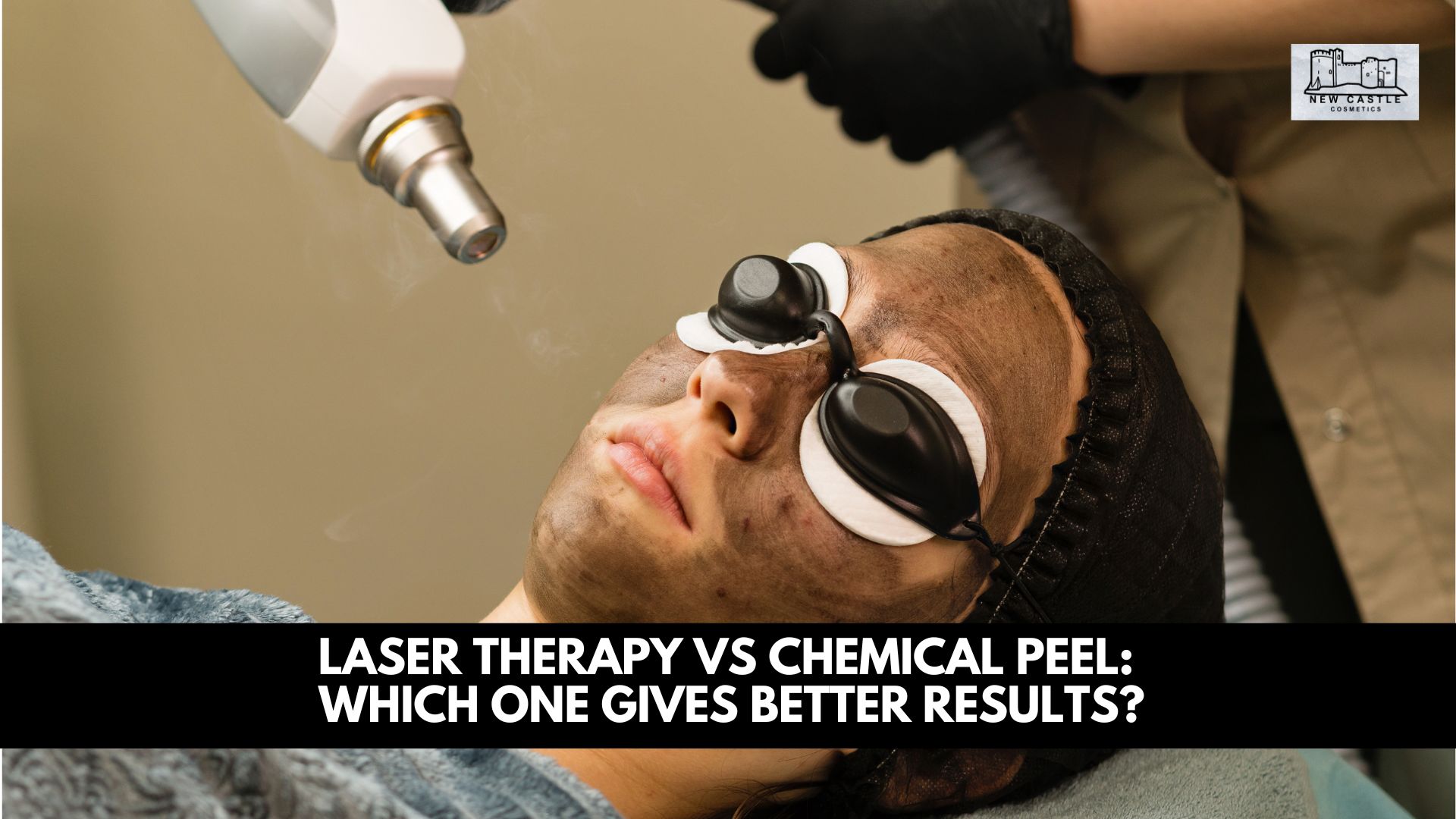
Laser therapy and chemical peels can both improve the texture and tone of the skin, but they work in different ways. A chemical peel uses acids to lift away dead surface cells so fresher skin can come through. Laser treatment uses light energy to prompt renewal at a deeper level. The right choice depends on your skin type, what you want to change and how much recovery time you can manage. Knowing how they compare makes the decision easier.
What is a chemical peel and how does it work?
A chemical peel is an acid solution applied to the skin for a set time. It loosens the bonds between dead cells, encouraging the skin to shed them and renew. Peels are often used for dullness, fine lines and patchy tone. Light peels usually cause little more than mild redness, while deeper peels act further down and need more recovery. Any change tends to show gradually as new skin forms.
What is laser therapy and how does it work?
Laser therapy uses concentrated light to heat or remove targeted areas of skin. This controlled damage prompts the skin to repair itself and make new collagen. Lasers are used for deeper concerns such as pigmentation, some scarring and wrinkles, and the settings can be adjusted to suit the skin. Recovery varies widely. A gentle laser may leave skin pink for a few hours, while a stronger one can need a week or more.
Which treatment works better for uneven skin tone and pigmentation?
For deep pigmentation, sun damage and age spots, laser is often the stronger option because the light can target melanin below the surface. Skin tone matters, though, as some lasers carry a higher risk of pigment changes on darker skin. Chemical peels tend to help with milder discolouration and surface brightness. Stubborn patches may need several sessions of either, and some people do well combining approaches over time.
What about fine lines and skin texture?
Peels smooth the skin by removing rough, dead cells. A light peel can leave the surface looking fresher, and a medium-depth peel may soften fine lines. Laser works further down, prompting collagen that can firm and refine the skin more noticeably, usually with more recovery. Microneedling sits somewhere in between. It uses fine needles to create tiny channels in the skin, which can encourage collagen without heat or light.
Which option has less downtime?
Light chemical peels usually involve the shortest recovery, with some redness or flaking for a day or two. Laser varies a great deal. Non-ablative lasers, which leave the surface intact, may need only a few hours to settle. Ablative lasers can take several days or longer. If your diary is busy, a gentle peel is generally easier to plan around.
Which treatment is better for sensitive skin?
Sensitive skin often copes better with mild chemical peels using lactic or mandelic acid. These acids have larger molecules than glycolic acid, so they work more slowly and tend to irritate less. Some lasers can be too intense for reactive skin unless the settings are adjusted carefully. A good consultation should cover your skin history, conditions such as rosacea and how you have reacted to products before.
Are there any risks or side effects?
Both treatments carry risks, and these should be explained before you agree to anything. After a peel, temporary redness, tightness and flaking are common. Laser can cause swelling, dryness or, less often, pigment changes. Microneedling for texture and fine lines has its own short recovery, usually redness for a day or so. Daily high-factor sunscreen and gentle skincare after treatment can lower the risk of problems.
How do you know which option to choose?
Start with your main concern and how much recovery you can manage. Peels are often chosen for brightening and smoothing, and lasers for deeper scarring or pigmentation. Some people alternate between treatments across the year. A consultation is the best place to weigh these options against your skin type and history.
How can Newcastle Cosmetics help you decide between laser and peel treatments?
Newcastle Cosmetics offers chemical peels and microneedling in Newcastle upon Tyne. We do not offer laser therapy, but we can explain how a peel or microneedling compares with laser, which is available from other providers. Every enquiry starts with a free consultation, where we look at your skin, talk through what you hope to change and explain the likely risks and recovery. Treatment is only booked once suitability has been assessed.
The best treatment is the one that fits your skin
Laser therapy and chemical peels can both give good results when matched to the right skin. Peels tend to suit surface concerns and shorter recovery. Lasers reach deeper and usually ask more of your skin afterwards. Neither is better in every case. With clear, honest advice, you can pick the one that suits your skin and your diary.
If you would like to talk through a chemical peel or microneedling, you can request a free consultation with Newcastle Cosmetics.